Project Snapshot
Timeline: Ongoing system initiative
Role: UX Designer (UX Strategy + Governance Lead)
Platform: Enterprise AEM ecosystem
Scope: Reusable page templates, component guidance, author documentation
Partners: AEM engineering, content authors, designers, stakeholders
The Challenge
Teams were building enterprise landing pages in multiple ways, resulting in inconsistent layouts, accessibility risks, and increased production time. The lack of a standardized authoring framework created friction for content authors and limited scalability across the AEM ecosystem.
We needed a reusable system that balanced flexibility with structure — enabling faster builds while maintaining accessibility, consistency, and governance at scale.
My Contribution
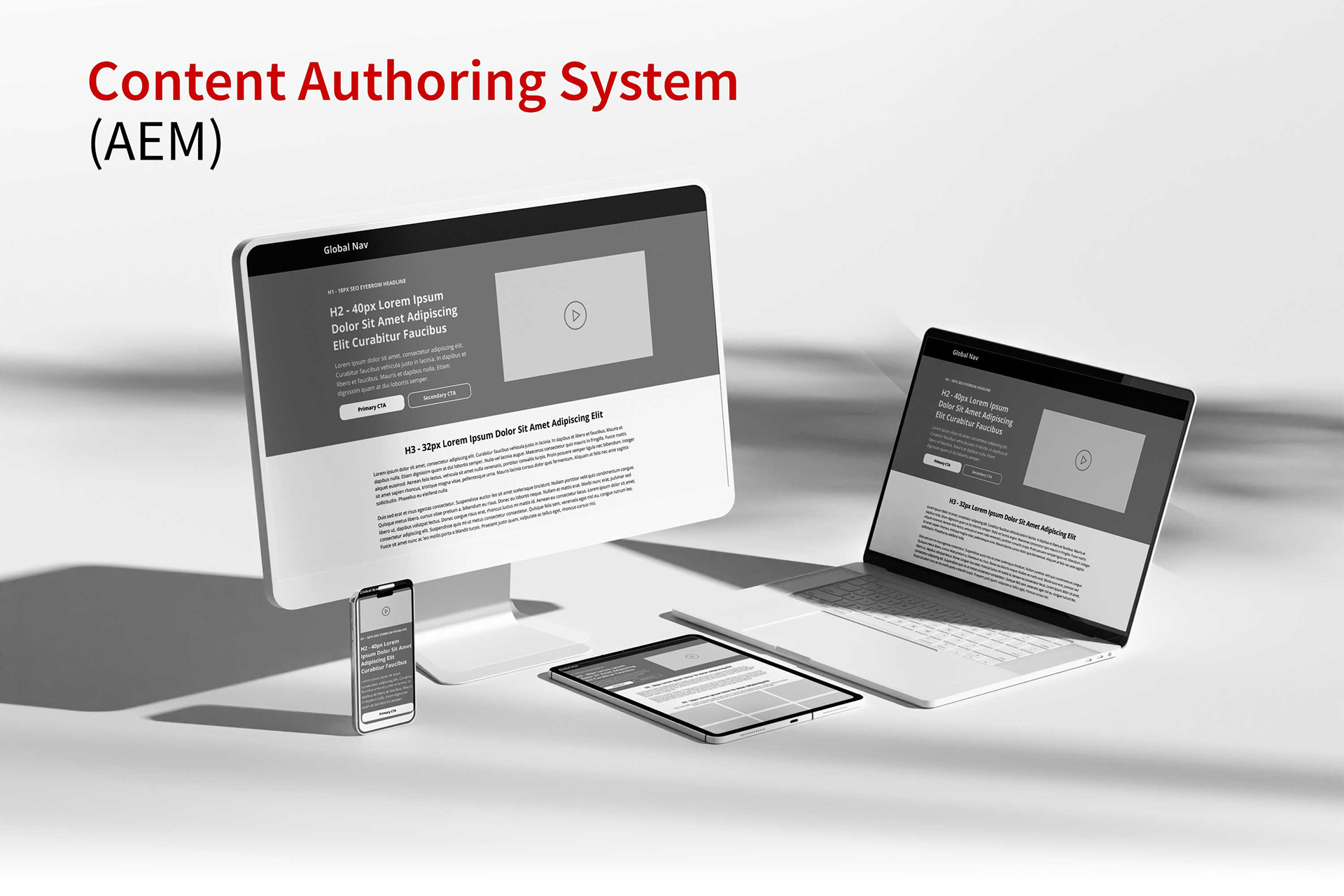
• Defined and implemented a reusable authoring framework across the majority of enterprise AEM pages.
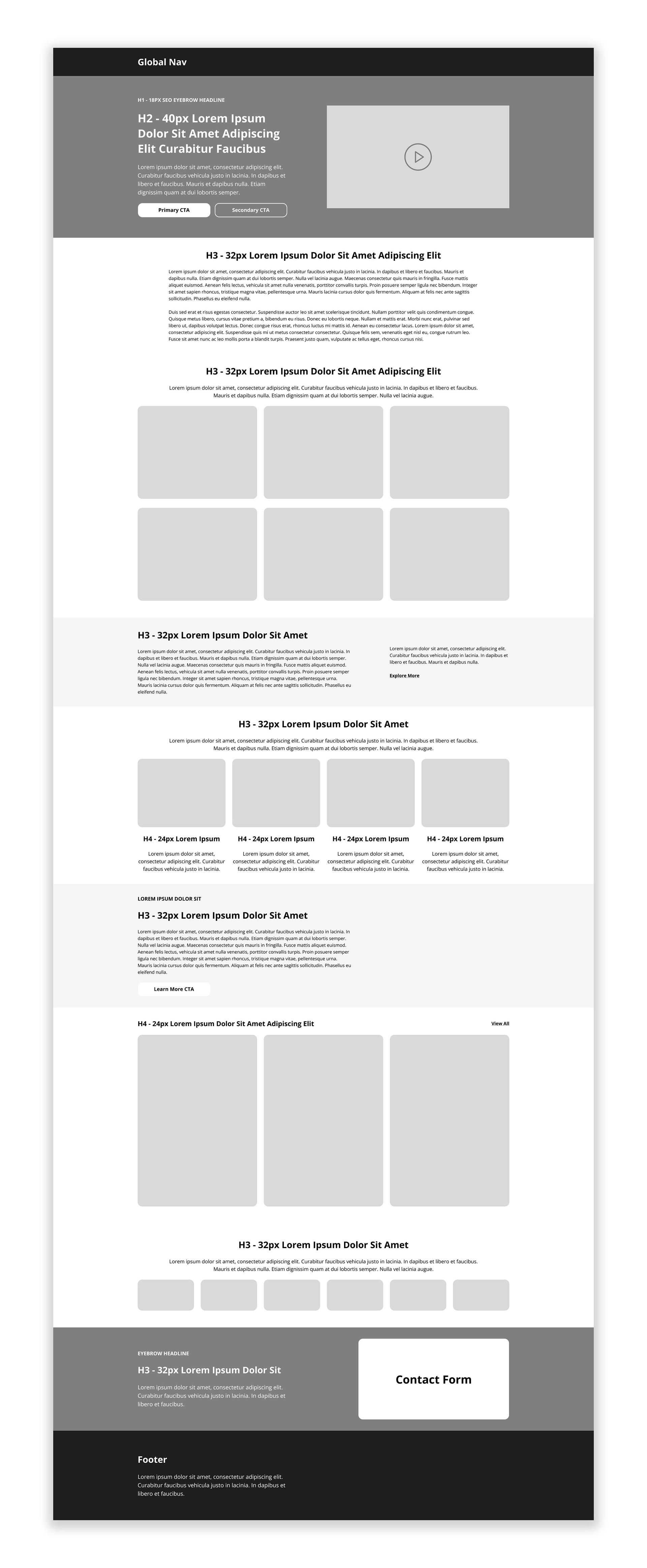
• Established scalable hierarchy patterns and layout rules to ensure structural consistency across templates.
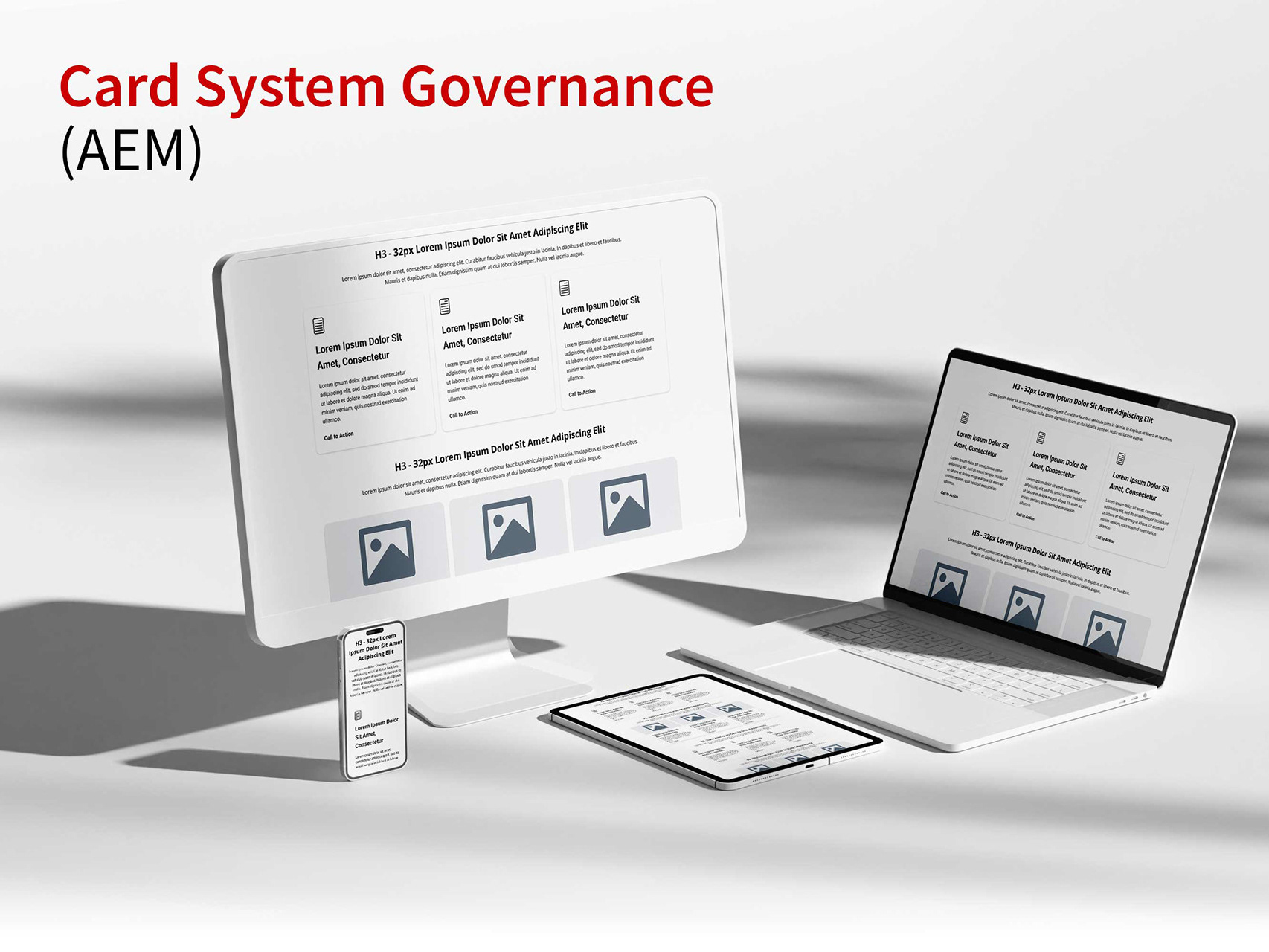
• Developed detailed component guidelines (CTA usage, character limits, accessibility standards) to reduce ambiguity and improve cross-team alignment.
• Partnered with engineering and content teams to operationalize the framework through documentation and standardized intake processes.
• Facilitated cross-functional reviews to align governance, accessibility (WCAG), and author workflows.
• Established scalable hierarchy patterns and layout rules to ensure structural consistency across templates.
• Developed detailed component guidelines (CTA usage, character limits, accessibility standards) to reduce ambiguity and improve cross-team alignment.
• Partnered with engineering and content teams to operationalize the framework through documentation and standardized intake processes.
• Facilitated cross-functional reviews to align governance, accessibility (WCAG), and author workflows.
Key Improvements
• Consistency at Scale: Reduced layout variability and improved brand cohesion across enterprise pages.
• Faster Production Cycles: Provided authors with clear structural templates, reducing back-and-forth and accelerating page builds.
• Accessibility by Design: Embedded WCAG standards directly into templates rather than relying on post-build audits.
• : Created documentation that reduced ramp time for new content authors and designers.
• Faster Production Cycles: Provided authors with clear structural templates, reducing back-and-forth and accelerating page builds.
• Accessibility by Design: Embedded WCAG standards directly into templates rather than relying on post-build audits.
• : Created documentation that reduced ramp time for new content authors and designers.
Impact
This framework became the standardized foundation for enterprise landing pages within AEM and was adopted across multiple teams. By shifting from ad hoc page builds to a governed template system, we reduced design review cycles and increased cross-team consistency.
Embedding accessibility requirements directly into templates improved ADA compliance by default rather than relying on post-build corrections. Standardized intake guidelines and documentation streamlined collaboration between content authors, designers, and engineering, accelerating production timelines while maintaining flexibility for complex use cases.
Next Steps
• Continue refining guidelines based on real author feedback and component evolution.
• Expand the framework as new modules/components become available in AEM.
• Expand the framework as new modules/components become available in AEM.
Confidentiality note: This wireframe is a simplified, sanitized representation of the framework. Branding, real content, and internal documentation have been removed to protect proprietary information. The goal here is to show the modular structure and how the sections work together in a component-based CMS.